Portland, Please come back.
The title of this song is the plea. But the chorus doesn't beg. It welcomes. ", you're welcome back tonight." That's the line — and the difference between the plea and the welcome is the whole song.
I've lived around Portland long enough to remember when Portland was its own answer to itself. When you didn't have to qualify what made it Portland — you just walked Hawthorne or Burnside or stood at Pioneer Square or got coffee at Stumptown, and the city told you what it was. There were always rough edges. There were always rainy nights and late guitars. But the texture of all of it was unmistakable. You knew you were here.
A lot has changed.
The song doesn't pretend otherwise. "Pioneer Square where the crowds once sang / Now the sirens and the shadows hang." That line was the hardest one to write. Pioneer Square was Portland's living room, and a lot of people have stories about it that don't match what walking through there feels like in recent years. The song acknowledges that out loud. "City scars." I'm not interested in pretending the scars aren't there. I'm interested in writing toward what comes after them.
Which is where the chorus comes in. Notice the word: welcome. Not "come back to me." Not "come back or I'll leave." Just — you're welcome back, whenever you're ready. The door is open. The room is still here. The rain is still falling on the bridges and the bridges are still standing.
Portland, you're welcome back tonight Under the bridges in the rainy light Old Stumptown beating through the black and gray Portland… find your way.
I wrote it with the bridge as a sing-along, because that's the form this song needed to take. It's not a solo lament. It's a song that gets bigger when other voices join it. That's how cities come back too — not because one person wills it, but because enough people who love the place keep showing up to sing the chorus.
This song has some honesty in it that some people will read as political. I'd say it's more honest than political. It's about the experience of watching a place you love become something you don't fully recognize, and refusing to either pretend it didn't happen or let that be the last word. The sirens are real. The shadows are real. So is Stumptown still pouring coffee. So is the rain on the tracks down Burnside. So are the guitars you can still hear in the night, playing through the city scars.
Still in the night you can hear guitars Playing through the city scars.
That's the line that holds the song together for me. The scars are there. The music is still being played. Both of those things are true, and the song refuses to choose between them.
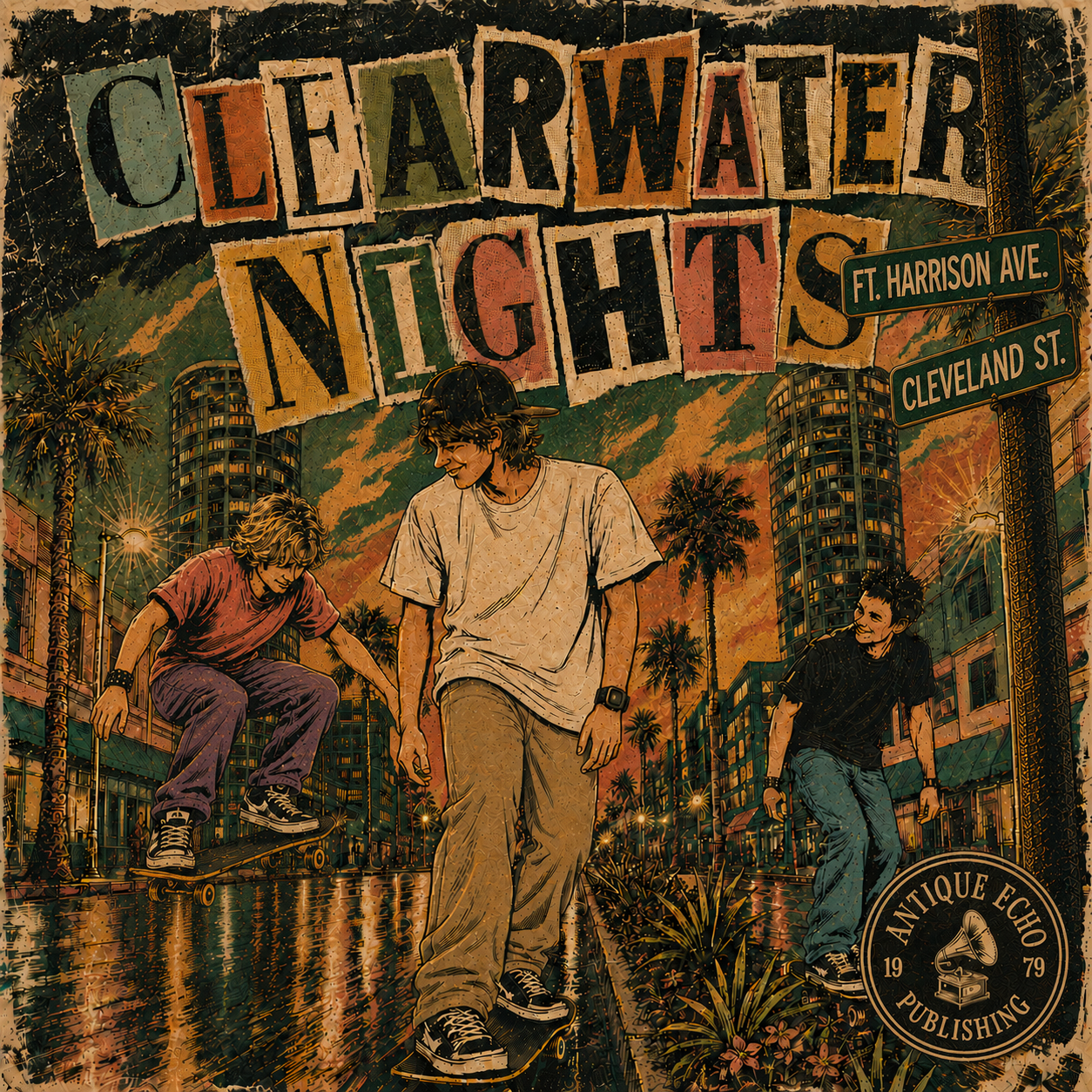
I put this fifth on the album because at this point in Clearwater Nights, we've been to Florida and the Cascades and through some interior darkness. Portland, Please Come Back is the moment the record turns to a specific place that's still being lived in — not memory, not landscape, but a city that's right now figuring out what it's going to be next. The earlier songs are looking back. This one is looking sideways, at home, and saying: I see you. I love you. The door is open.
If you live in Portland and you've watched the changes — if you grew up here, or moved here in the era that doesn't exist anymore, or left and don't know if you can come back — this song is for you. If you live somewhere else and you have a city that you love that's grieving its own changes, this song is for you too. It's a love letter that doesn't lie about why it had to be written.
That's the song.
—