Cascade Line
There's a particular Oregon morning that this song is trying to hold. Fog low in the valley. Pines still asleep. The first golden light of the day starting to pour over the Cascade Range. If you live here long enough, you stop noticing those mornings. Then one day you do notice — and you realize you've been driving through something extraordinary every time you started the car.
Cascade Line is the song that came out of finally noticing.
I wrote it as a travelogue, but not in the sense of cataloging a trip. It's a travelogue in the sense that the song itself is the journey. The opening verse sits in the Willamette Valley floor where the morning fog is still hanging. The bridge moves up and over the Cascades, then drops down toward the coast. Highway 101 meets the sea. Haystack Rock comes into view through the haze. The day stretches out into late afternoon, and the orange fire of sunset finally falls across all of it. By the end of the song you've traveled the width of western Oregon — and so has the listener.
The Willamette Valley is home. I live just outside it in , and most of the drives that ended up in this song are drives I've taken dozens of times. Highway 18 down through the . Spirit Mountain in the rearview. Lincoln City. North or south on 101 depending on the day. Sometimes the destination didn't matter. Sometimes I was just driving because the light was doing something I wanted to keep watching.
What the song is really trying to say is in its chorus:
Highway 101 meets the sea Where memories and dreams are made.
That's the line everything else hangs off. Because the strange thing about driving the same roads over and over isn't that they become routine. It's the opposite. Something about the consistency lets the moments stack. Every drive contains every other drive you've taken — the mornings with deer crossing the road, the afternoons when the fog lifts at exactly the right moment, the evenings when you pull over because the sunset is doing something impossible over the Pacific. The road remembers them all even when you don't. And every new drive adds to the stack.
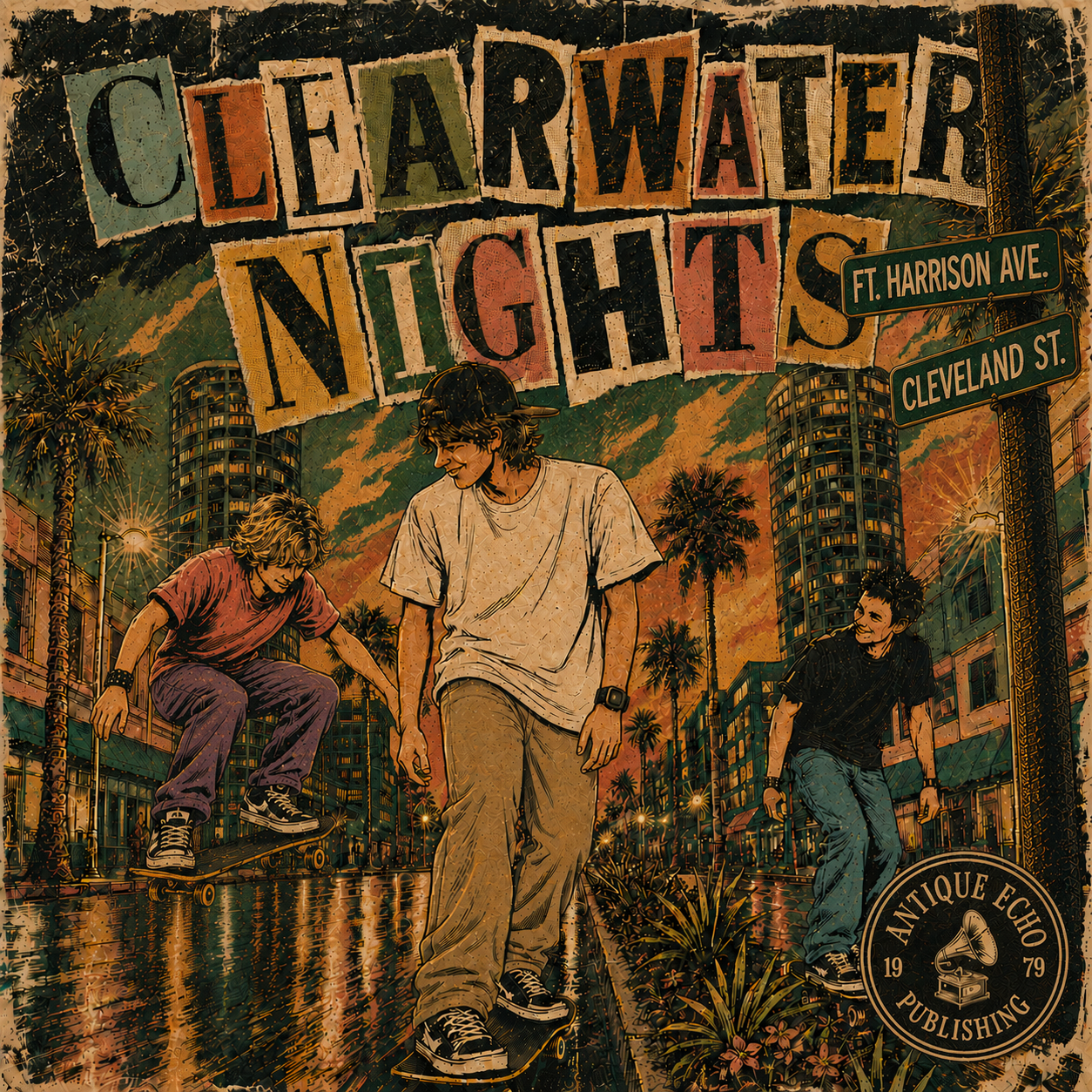
That's why the song is in the present tense. "Morning climbs the Cascade line." "Sun on the western ridge." "Haystack Rock above the tide." It's not nostalgia. It's recognition — the kind that happens while a thing is still happening. Most of Clearwater Nights is about looking back. Cascade Line is the one song that lives entirely in the moment it's describing. It's the song that knows it's making memory while it's still happening, which is rare and easy to miss and worth holding when you catch it.
I put this track second on the album for a reason. After Drifting Paths — the haunted opener, the road through the dark — I wanted the listener to come into the light. Cascade Line is the morning after. The storm cleared. The sky is wide open. Whatever you were walking through, you're standing on the other side of it now, and the view is unbelievable.
I produced this song with as much air as I could fit in it. Open mixes. Bright top end. Pedal steel that climbs the way the sun climbs. The reverb tail feels like distance — like you can see how far the highway runs in front of you. Strip the production back and the song still works, but the production is the landscape. It's supposed to make you feel like you're driving even if you're standing still.
There's another line near the end of the song that I keep coming back to: "Mountains fade but the feeling stays." That's the part that makes this song belong on the album. Cascade Line is celebratory — a love letter to a place — but it's also pointing at the same thing the rest of Clearwater Nights is pointing at. The landscape changes. The drive ends. The day folds into night. What stays is the feeling. The memory. The recognition that something mattered enough to mark it.
If you've ever taken Highway 101 south out of Lincoln City and watched the road carve along the cliffs, or driven Highway 26 through the Coast Range as the fog lifts and the trees open up, you know what Cascade Line is about. It's a love letter to western Oregon — to the Cascades, the valley, the coast — and to the kind of day that turns an ordinary drive into something you'd put in a song to keep.
That's the song.
—